

Key Takeaways
- Many lenders let you arrange a new deal around three to six months before your fixed rate ends, so it pays to start early.
- If you do nothing, your mortgage will usually move to your lender’s reversion rate, which is often much higher.
- A product transfer with your current lender often needs no full affordability check, which can help if your circumstances have changed.
- The lowest rate is not always the cheapest deal once you factor in fees, the length of the fix and your mortgage term.
- Comparing a product transfer with the wider market, well before your deal ends, gives you the best chance of finding the right fit.
The letter usually arrives without much warning. Your fixed rate deal is ending soon and your lender wants to know what you plan to do next. If you are wondering when you should start remortgaging, the short answer is earlier than you might think.
Many lenders let you secure a new deal around three to six months before your current rate ends. Starting in that window gives you time to compare options without pressure. It also matters which date you work to because the end of your fixed rate and the end of your early repayment charges are not always the same.
What Happens When Your Fixed Rate Mortgage Ends?
When your fixed rate ends, your mortgage does not simply stop. In most cases it moves onto your lender’s standard variable rate or sometimes a follow on tracker rate. These reversion rates are usually much higher than the deals offered to people switching.
Your lender sets its standard variable rate and can change it at any time. It tends to move with the Bank of England (BoE) base rate. Even so, variable rates often sit well above it.
For many households that change could mean a noticeable rise in monthly payments. You are far from alone in facing this decision. UK Finance expected around 1.8 million fixed rate mortgages to come to an end during 2026. Planning ahead is the simplest way to avoid paying more than you need to and our guide on what to do when your fixed rate is ending covers your first steps.
When Should You Start Remortgaging? Timing Your Next Deal
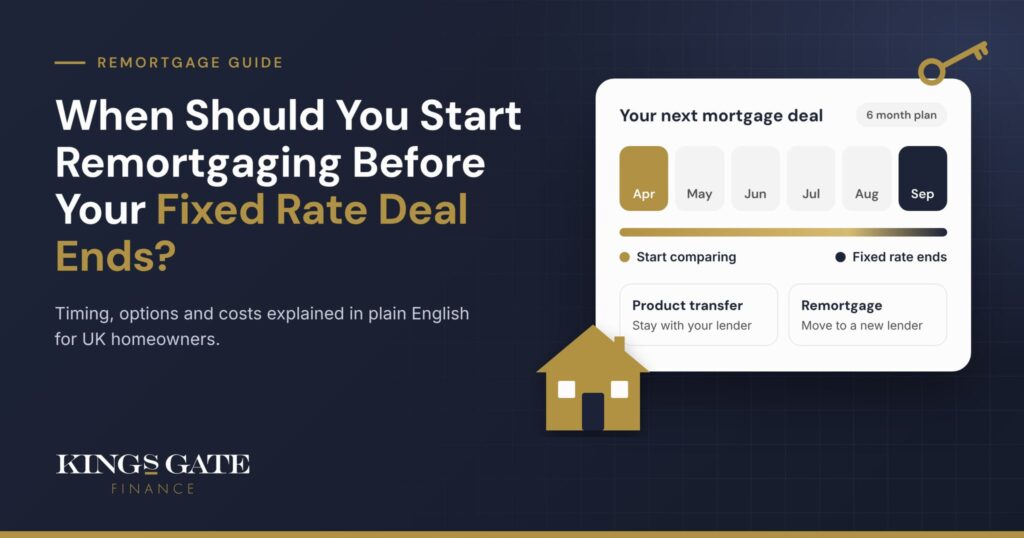
As a general rule, start looking around six months before your deal ends. Many lenders let you arrange a product transfer three to six months ahead and an offer from a new lender is often valid for around six months. That means you can usually secure a rate in advance, ready to start the day your current deal finishes.
Before you do anything, check two dates on your mortgage paperwork. The first is when your fixed rate ends. The second is when your early repayment charges stop. These charges, often a percentage of your balance, apply if you leave a deal early. On some mortgages they end on a different date from the rate itself, so moving even a few days too soon could prove costly.
A practical step is to set a reminder for seven months before your deal ends. That gives you time to gather payslips, bank statements or accounts and speak to an adviser. Leaving it until the final few weeks can limit your choices, especially if you move lender and need a valuation and legal work completed in time.
Product Transfer or Remortgage: Which Route Suits You?
You have two main routes. A product transfer means staying with your current lender and moving onto one of its new deals. A remortgage means moving your mortgage to a different lender altogether.
A product transfer is often quicker and simpler. If you are not borrowing more or changing your term, many lenders will not carry out a full affordability check. That can help if your income has fallen, you have recently become self employed or you are on parental leave. Under the government’s Mortgage Charter, participating lenders have agreed to support customers who are up to date with payments to switch deals without another affordability check.
The trade off is choice. Your current lender can only offer its own products, which may not be the most competitive deal available. Moving to a new lender opens up a wider range of deals but involves a full application, credit checks, a valuation, mortgage booking fees and legal work. Many lenders offer free valuations and legal work on remortgages, which helps keep costs down.
Comparing both routes side by side is often where independent mortgage advice adds the most value.
How Your Circumstances and Property Value Affect Your Options
A lot can change during a fixed rate deal and lenders will look at where you are now rather than where you were when you first borrowed.
If you are moving to a lender, expect questions about your income, regular outgoings and credit history. A new job still in its probation period, a drop in earnings or recent missed payments could narrow your options. Self employed borrowers will usually need recent accounts or tax calculations.
Your property value matters too. Lenders price deals by loan to value, which is the size of your mortgage compared with what your home is worth. If you have paid down your balance or your home has risen in value, you may have moved into a lower band, such as below 75% or 60%. That could give you access to more competitive rates.
Comparing Deals on Total Cost, Not Just the Rate
It is tempting to pick the lowest headline rate but that is not always the cheapest deal. Arrangement fees can cost several hundred pounds or more, so a slightly higher rate with no fee may work out cheaper, particularly on a smaller mortgage. If you add a fee to your loan, you will pay interest on it for the rest of your term.
Think too about how long to fix for. A shorter fix gives you flexibility sooner, while a longer one offers certainty over your payments. A tracker moves up and down with the base rate and our comparison of fixed and tracker mortgages explains the trade offs.
Some people extend their mortgage term to lower their monthly payments. That can ease pressure now, but it usually means paying more interest overall.
Remortgaging is also a common time to borrow more, whether for home improvements or to consolidate other debts. Think carefully before securing other debts against your home, as spreading them over a longer period could increase the total amount you repay.
It is also a sensible moment to check that your protection cover still matches your mortgage and your family’s needs.
Start Early and Stay in Control
Knowing when to start remortgaging puts you back in control. Beginning around six months before your fixed rate ends gives you time to check your dates, compare a product transfer with the wider market and choose a deal that suits your plans.
It is completely normal to find this a little daunting, especially if your circumstances have changed since you last fixed. MoneyHelper’s guide to remortgaging to get the best deal is a useful starting point and acting early almost always leaves you with more options.
Everyone’s mortgage is different and the right next step depends on your own circumstances. At Kingsgate Finance, we offer personalised, independent advice and can compare your lender’s options against the wider market well before your deal ends. If you would like to talk it through, get in touch with the team for a friendly conversation with no obligation whatsoever.
(Your home may be repossessed if you do not keep up repayments on your mortgage.)
Frequently Asked Questions
1. Can I remortgage if my property has dropped in value?
Ans: Usually yes, though a higher loan to value may mean higher rates. If you are in negative equity, a product transfer with your current lender is often the most realistic option.
2. Will remortgaging affect my credit score?
Ans: A full application to a new lender may cause a small, temporary dip in your score. Soft eligibility checks and most product transfers do not affect it.
3. Can I switch to a lower rate if rates fall after I have secured a deal?
Ans: Often, yes. Many lenders let you move to a better like for like deal before your new term starts, although this is not guaranteed and may involve a new fee.
4. Should I fix my mortgage for two years or five years?
Ans: A two year fix may suit you if your plans could change soon, while a five year fix gives longer certainty but usually longer early repayment charges. An adviser can help you weigh this up.
5. How long does a remortgage usually take?
Ans: A product transfer can take just days, while moving lender often takes around four to eight weeks. Starting early gives you a buffer if anything is delayed.