

Key Takeaways
- Distinct Ownership Shares: Unlike joint tenants, tenants in common can own specific shares of a property (e.g., 50/50, 70/30) rather than owning the whole property equally.
- Control Over Inheritance: Your share does not automatically pass to the co-owner when you die. Instead, it passes according to your Will, which is vital for those with children from previous relationships.
- Tax Efficiency for Landlords: This structure allows investors to split rental income and capital gains according to their ownership share, potentially utilising lower tax bands.
- Probate is Usually Required: Unlike joint tenancy where the property passes automatically, probate is almost always required to transfer or sell a deceased tenant in common’s share.
- Joint Mortgage Liability: Even if you own unequal shares of the equity, you are usually jointly and separately liable for the mortgage payments.
Buying a property is often the largest financial commitment you will make in your lifetime. Amidst the excitement of viewings and the stress of mortgage applications, your conveyancer will eventually ask you a critical question: How do you wish to hold the property?
It sounds like a minor administrative detail, but ticking the wrong box on your Land Registry forms can have massive financial consequences years down the line. In the UK, you generally have two choices: Joint Tenants or Tenants in Common. While Joint Tenancy is the default for many married couples, opting to be Tenants in Common is increasingly popular for unmarried couples, friends buying together, and savvy investors looking to be tax efficient.
This guide breaks down exactly what it means to be tenants in common, highlighting the benefits and potential pitfalls to help you make an informed decision.
What are Tenants in Common?
To understand tenants in common, it helps to compare it to the alternative.
If you purchase as Joint Tenants, you and your partner are viewed as a single entity. You both own 100% of the property together. If one of you passes away, the property automatically belongs to the survivor through the “Right of Survivorship”.
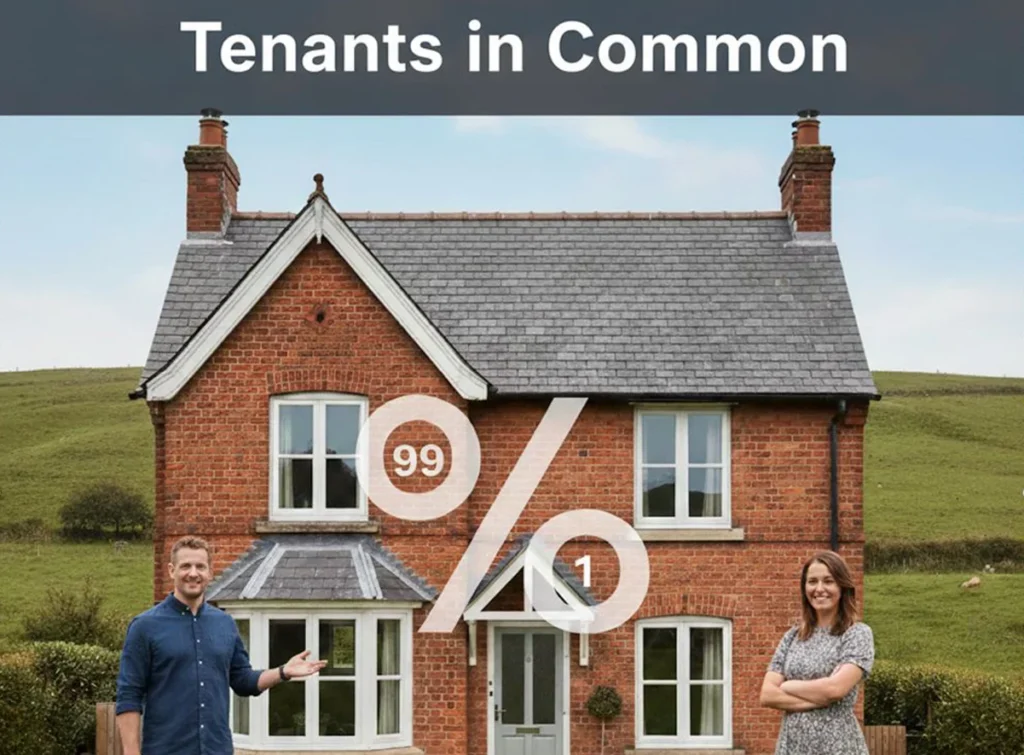
Tenants in Common are different. Think of it less like a marriage and more like a business arrangement. You each own a distinct, specific share of the freehold or leasehold. It could be an equal 50/50 split, 70/30 split to reflect one person paying a larger deposit or 99/1split for specific tax planning purposes. Because you own a specific slice of the property, you can do what you like with that slice. You can leave it to your children in your Will, or in some cases, sell your share independently.
Key Benefits of This Ownership Structure
There are compelling reasons why many UK homeowners and investors choose this ownership structure over the standard joint tenancy.
1. Financial Protection for Unequal Deposits
If you are buying with a friend or an unmarried partner, you may be contributing different amounts to the deposit. If you put in £50,000 and your partner puts in £10,000, a standard Joint Tenancy would usually treat you as equal owners. As tenants in common, you can draft a Deed of Trust that legally records that you own a larger share of the property. This ensures that if the relationship breaks down and the house is sold, you get your fair share of the equity back.
2. Control Over Inheritance
This is a major factor for those who have children from a previous relationship or a blended family. Under joint tenancy, if you die, your house goes straight to your co-owner, effectively bypassing your children. As tenants in common, your share becomes part of your estate. You can write a Will leaving your 50% share to your children, ensuring their future inheritance is secure.
3. Tax Planning for Landlords
For buy-to-let investors, being tenants in common can be a powerful tool for tax planning. HMRC typically assumes a 50/50 split on rental income for joint owners. However, if you are tenants in common, you can split the rental income to match your ownership share.
For example, if one owner pays tax at the basic rate (20%) and the other at the higher rate (40%), it may make financial sense to structure the ownership so the basic rate taxpayer owns a larger share (e.g., 90%). This allows the bulk of the rental income to be taxed at the lower rate, potentially saving thousands of pounds a year. Note: Married couples must file a Form 17 with HMRC to formalise this arrangement.
Potential Drawbacks You Need to Know
While the flexibility is attractive, this structure brings added administrative responsibilities and some risks.
1. The Probate Requirement
This is the most significant administrative hurdle. When a joint tenant dies, the property seamlessly transfers to the survivor. However, when a tenant in common dies, their share is frozen as part of their estate. Probate is almost always required to transfer or sell that share. This can be a lengthy process and may delay a sale if the surviving owner wants to move quickly.
2. No Automatic Survivorship
While controlling your Will is a benefit, it can be a drawback if you are unprepared. If you die without a Will, your share of the house will not go to your partner automatically. Your share will go to your closest family members automatically (UK intestacy rules). This could leave a surviving unmarried partner in a vulnerable position, potentially co-owning a house with your estranged siblings or parents.
3. Disputes Over Selling
Conflict can arise if one owner wants to sell and the other does not. Because you have distinct shares, one party cannot easily force the other to sell without potentially going to court. While you can apply for an Order for Sale, this is a stressful and costly legal route. A robust Deed of Trust created at the start can help mitigate these disputes by setting out exit strategies in advance.
4. Joint Mortgage Liability
It is important to remember that even if you own unequal shares of the property (e.g., 10% and 90%), your mortgage lender will almost certainly view you as Joint and equally liable. This means if your partner stops paying their share of the mortgage, the bank can pursue you for the full amount, not just your share.
Is This Ownership Structure Right for You?
Choosing between Joint Tenants and Tenants in Common depends entirely on your personal circumstances.
You might prefer Tenants in Common if:
• You are contributing unequal amounts to the deposit.
• You have children from a previous marriage you wish to provide for.
• You are investors looking to manage income tax and Capital Gains Tax liabilities efficiently.
• You are buying with friends or siblings.
You might prefer Joint Tenants if:
• You are a married couple with no children from previous relationships.
• You want the simplest possible legal process if one of you passes away.
• You view your assets as entirely shared and equal.
It is worth noting that you can change your mind. If you are currently Joint Tenants, you can change to become tenants in common. This is often done during divorce proceedings or for estate planning purposes.
Final Thoughts
The decision on how to hold your property title is more than just paperwork; it is a fundamental part of financial planning. While tenants in common offer superior flexibility and protection for unequal contributions, it requires a valid Will and often a Deed of Trust to work effectively.
If you are unsure which path to take, it is always advisable to speak with a conveyancing solicitor or a tax advisor who can review your specific situation. Getting the structure right today can save you significant stress and money in the future.
Frequently Asked Questions (FAQs)
1. Do Tenants in Common avoid probate?
A: No, generally they do not. Because the deceased’s share does not automatically transfer to the surviving owner, probate is usually required to deal with the estate and transfer the property title.
2. Can I sell my share of the property without the other owner’s permission?
A: Theoretically, yes, a tenant in common can sell their specific share. However, finding a buyer for 50% of a house is practically very difficult. In reality, if one party wants to sell the whole property and the other refuses, the person wishing to sell may have to apply to the court for an order to force the sale.
3. Does being Tenants in Common help with Inheritance Tax?
A: It can do. Because you can leave your share to anyone, you can utilise your tax-free allowances more effectively than if the whole property simply passed to a spouse. However, the value of your share is still part of your estate for Inheritance Tax calculations.
4. What happens if we don’t write a Deed of Trust?
A: Without a Deed of Trust or express declaration, the law may assume you own the property in equal shares, even if you paid different deposit amounts. This can lead to disputes and financial loss if you split up or sell the property.
5. Can we change from Joint Tenants to Tenants in Common later?
A: Yes. This process is called “severance of joint tenancy.” It is free to do via the Land Registry and does not necessarily require the other owner’s agreement, although they must be notified.